Group Facilitation
Facilitation of Group Programmes and Specialised Presentations
At Resolve Counselling, we design and facilitate group programmes or presentations tailored to the people in the room. Whether you're a workplace, a community organisation, an iwi or hapū group, or a foundation supporting a specific community, we build group work around the real dynamics, culture, and goals of your group, not a one-size-fits-all template.
Our groups and presentations draw on a mix of frameworks: psychoeducation, somatic and body-based practice, Te Ao Māori concepts, and relational models like the Drama Triangle. What stays constant is our belief that real change happens in community, in rooms where people feel safe enough to be honest, be challenged, and be seen.
We facilitate this work across professional settings (workplace teams, leadership groups, staff wellbeing) and community settings (iwi and community organisations, foundations, targeted support groups). Below are recent programmes and a specialised presentation Resolve has facilitated.
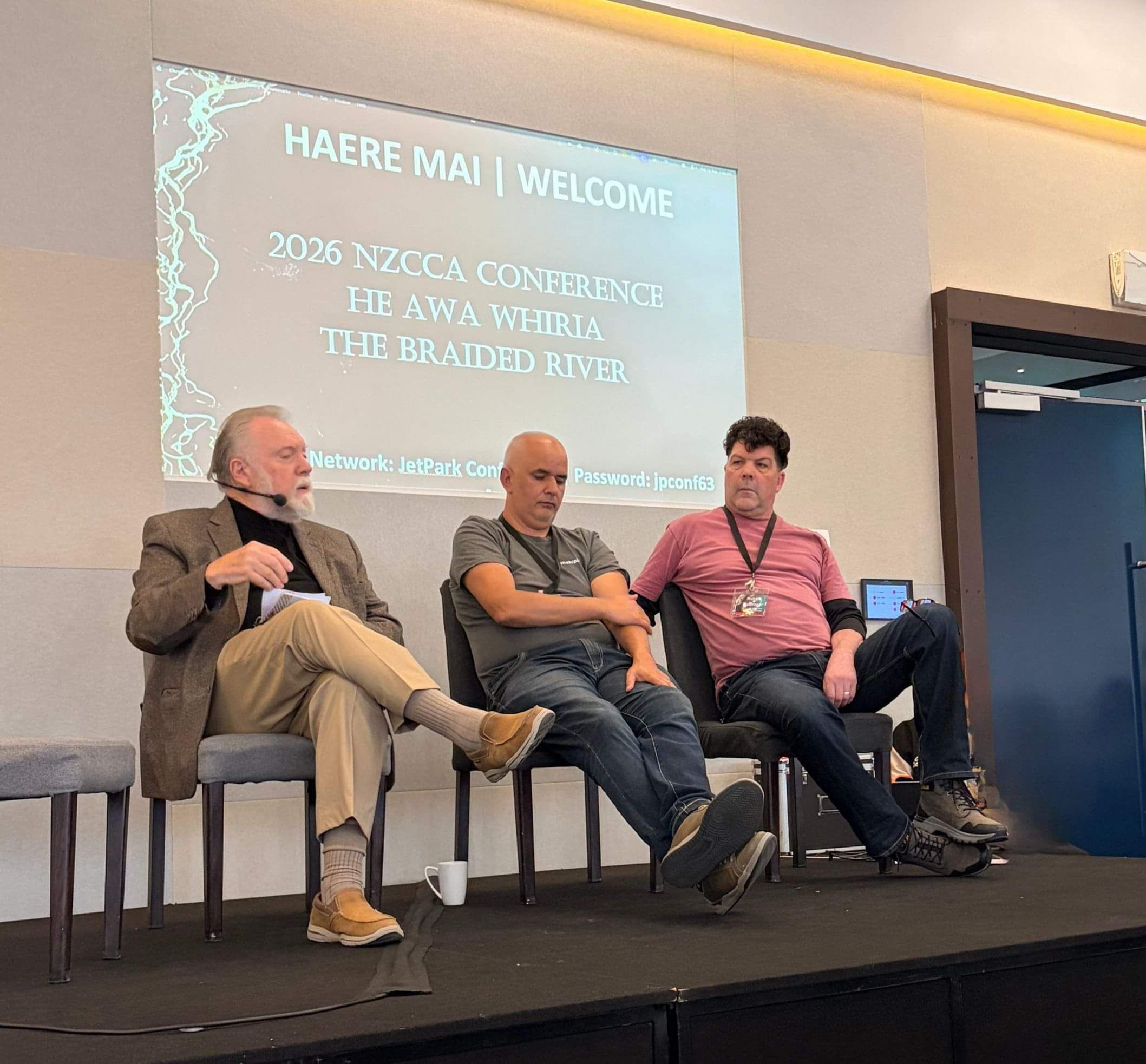
Speaking Engagement - NZCCA Counsellors Conference 2026: AI and ethics
Rob was recently invited by the NZCCA to speak to fellow counsellors, alongside Dr Gordon Neufeld and Dr Anthony Nihoniho.
Rob's presentation was on the pros and cons of AI in our field, where it can genuinely help, and where privacy and client trust have to come first. It's a conversation close to home for us, since these are exactly the questions we sit with every day in how we work with client information.
AI is showing up everywhere, including in how some practitioners think, research, and even take notes, and it's easy to see the appeal. But counselling isn't like most other work. What's said in the room is often the most vulnerable thing a person has ever shared, and that trust can't be handed over to a tool without knowing exactly what happens to it next.
So the question we keep coming back to isn't really "can this help?", it's "who does this actually serve?" A tool that saves a counsellor ten minutes but puts a client's privacy at risk isn't a good trade. That's the lens Rob brought to his talk, and it's the same lens we take very seriously in our day-to-day work here at Resolve.
Burnett Foundation - Wellington
Turangawaewae: Finding Your Place
A six-week evening course for men in their thirties and above, exploring voice, identity, and belonging. The program took its name from Turangawaewae — from tūranga (standing place) and waewae (feet), meaning "a place to stand." In Māori language and culture, turangawaewae represents a person's foundation, home, and deepest sense of belonging, the ground from which a person can speak, act, and be seen.
Facilitated by Rob and Bex (Resolve Counselling) alongside Lucas (The Burnett Foundation), the group brought together men from wonderfully diverse backgrounds. Rather than teaching the concept of turangawaewae as an idea to be understood from the outside, the programme used group interaction and somatic exercise to help each person locate what "a place to stand" actually meant in their own body and his own life. Through this experiential approach, turangawaewae stopped being an abstract cultural concept and became something personal and felt, a foundation each man could recognise, name, and return to.
Across six weeks, participants explored and celebrated the weaving together of their personal cultural identities, their Kiwi culture, and, for many in the group, the lived experience and culture of gay and trans men. Rather than treating these threads as separate or competing, the group process allowed each person to bring all the parts of who they are into the same room and to find a sense of belonging that didn't require leaving any part of themselves at the door.
By the close of the program, each person had built their own understanding of turangawaewae: not a fixed destination, but a living, embodied sense of where, and with whom, they stand.
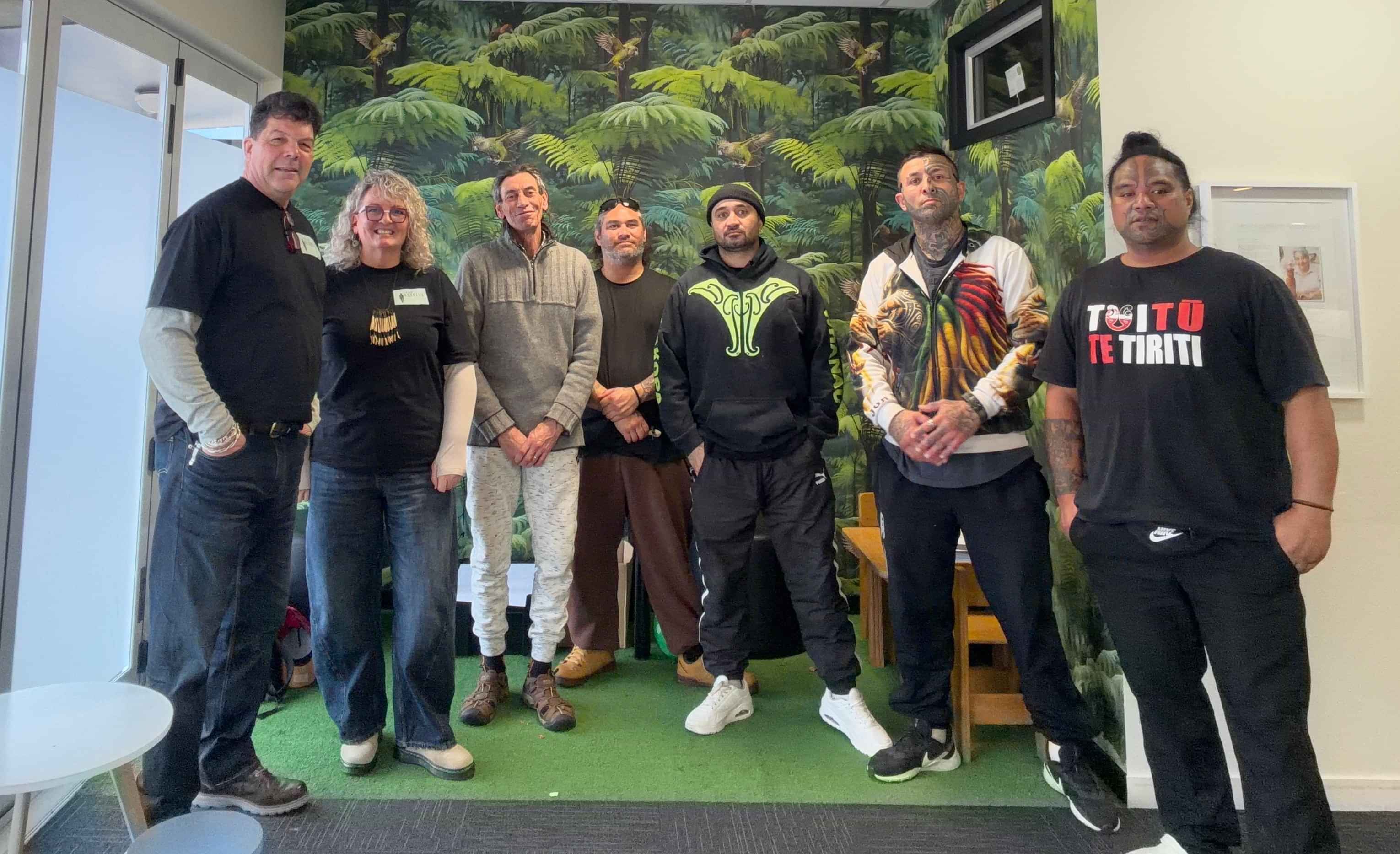
Whaiora - Masterton
Breaking Out of the Cycle
This 3-week, fortnightly program was designed for men, many with gang-affiliated backgrounds, who found themselves caught in entrenched negative cycles of relating and behaving. It was facilitated by Rob, supported by Bex, alongside Whaiora leaders Ngahina and Shane.
The programme used group interaction and somatic exercise to work through a progression of relational models:
The Drama Triangle — Perpetrator, Victim, Rescuer. The starting point: naming the roles men often unconsciously cycle through in conflict and relationship.
The Adult–Parent–Child Triangle — building on the Drama Triangle to explore the internal states driving those roles.
The Healing Triangle — Be Real, Be Honest, Be Safely Connected. The alternative to the drama cycle: a way of relating built on authenticity, honesty, and safe connection.
The programme closed with the concept of Manaaki, unpacking its two parts:
Mana — how a person holds and controls themselves within relationships.
Aki — the behaviours a person brings into a relationship. Aki can carry two very different meanings depending on the direction chosen. In its positive sense, it means to encourage, urge on, challenge, incite, and exhort. In its negative sense, it means to beat, pound, crash against, strike with great force, throw down, or slam.
This final teaching gave the group a clear and powerful choice: to bring Aki in its positive form, leading toward being real, being honest, and being a safe person, or to bring it in its negative form, which leads back into the drama cycle of perpetrator, victim, and rescuer, and keeps the cycle turning.
That's really the heart of why this kind of group work matters — because a "negative cycle" is never just an individual's problem. It lives in the relationships around a person, too.
Why cycles are relational, not just personal
When someone is stuck in a pattern like the Drama Triangle — swinging between Perpetrator, Victim, and Rescuer — that pattern doesn't stay contained to them. It shows up in how they parent, how they show up for a partner, how they treat mates, and how they're seen (or avoided) in their community. Someone stuck as a "Rescuer" at home might be a "Perpetrator" with mates. A man who grew up watching a cycle play out in his own whānau often carries the same roles into his adult relationships without realising it — because it's the model he was given.
Whānau
Breaking a negative cycle at the whānau level often means interrupting something intergenerational, a pattern of relating that's been passed down, sometimes for generations, without anyone naming it. Choosing "Be Real, Be Honest, Be Safely Connected" instead of the old roles can be the first time a child in that whānau sees a different way of being modelled. That's often where the deepest, longest-lasting change happens, because it changes what gets passed on next.
Friends
Friendship groups tend to have their own unspoken roles too, who's the one who always takes the blame, who escalates, who smooths things over. When one person shifts how they show up (more honest, less reactive, more genuinely present), it can unsettle the old dynamic, and sometimes it invites the whole friendship group to relate differently, or it reveals which friendships were actually built on the old cycle continuing.
Community
At a community level, especially for men from gang-affiliated backgrounds, the cycle can be woven into identity, loyalty, and survival, not just personal habit. Choosing the "positive aki" (encouraging, urging on, challenging in a good way) over the "negative aki" (striking, dominating, throwing down) isn't just a personal choice; it can quietly shift the norms of the group around them. One person choosing to be a safe, honest presence can change what's modelled and expected in that wider circle.
The through-line
This is really why the Manaaki framing from the Whaiora programme lands so well: mana is how you hold yourself, aki is what you bring into relationship, and every relationship, whether whānau, friend, or wider community, is shaped by which direction a person chooses. Change one person's pattern, and you don't just change them, you change what's possible in every relationship connected to them.

Bring Group Facilitation to Your Organisation or Community
Every group or presentation we run is designed around the people it's for. If you're part of a workplace, foundation, iwi, or community group looking to build connection, break unhelpful patterns, or support your people through a shared process — we'd love to talk about what that could look like for you.
"If you're going to preach dedication, work ethic, teamwork, unselfishness and being part of a team to accomplish a common goal, you have to live it, you can't just talk about it."
p: 027 232 9192 (Rob)
p: 021 274 3600 (Bex)